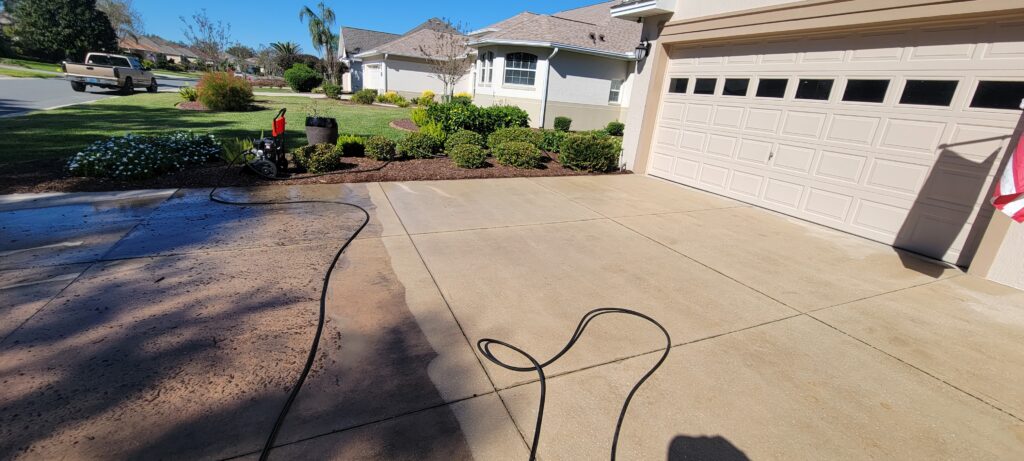
If you’ve ever looked at a dirty driveway, a streaky roof, or algae-stained siding and wondered how the pros get everything so clean, you’ve probably run into two terms: soft washing and pressure washing. They sound similar, and people often use them interchangeably – but they’re very different methods, and using the wrong one can actually damage your home.
At C2 Services, we use both every week on homes throughout The Villages, FL. Here’s a clear, no-jargon breakdown of how each method works, which surfaces they’re right for, and how to know which one your home actually needs.
What Is Pressure Washing?
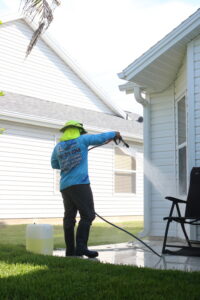
Pressure washing (sometimes called power washing) uses a high-pressure stream of water – often 1,300 to 3,000+ PSI – to physically blast away dirt, grime, mud, and debris. The cleaning power comes almost entirely from the force of the water itself.
Because it relies on raw pressure, it’s ideal for tough, durable surfaces that won’t be harmed by force:
- Concrete driveways and sidewalks
- Pavers and patios
- Pool decks
- Brick and stone
- Fences and other hard exterior surfaces
Done correctly, pressure washing delivers fast, dramatic results. Done incorrectly – or on the wrong material – that same force can etch concrete, crack pavers, strip paint, or drive water behind your siding.
What Is Soft Washing?
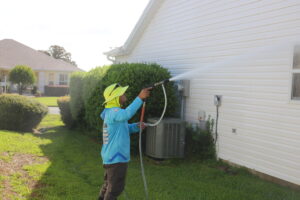
Soft washing takes the opposite approach. Instead of relying on force, it uses low pressure – roughly the same as a garden hose – combined with specialized, biodegradable cleaning solutions that break down dirt, algae, mold, mildew, and bacteria at the source.
The solution is applied, given time to work, and then gently rinsed away. Because there’s no high-pressure blasting, soft washing is safe for delicate and porous surfaces:
- Roof shingles and tile
- Vinyl, stucco, and painted siding
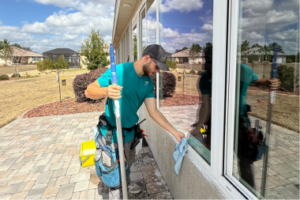
- Screen enclosures and lanais
- Wood surfaces
- Solar panels
The biggest advantage? Soft washing doesn’t just wipe away surface stains – it kills the algae and mildew that cause them, so your home stays cleaner for much longer.
Soft Washing vs. Pressure Washing: The Key Differences
Here’s a side-by-side look at how the two methods compare:
| Pressure Washing | Soft Washing | |
|---|---|---|
| Water pressure | High (1,300–3,000+ PSI) | Low (about the same as a garden hose) |
| Cleans using | The force of the water | Biodegradable cleaning solutions + a gentle rinse |
| Best for | Hard, durable surfaces | Delicate, porous, or painted surfaces |
| Removes | Dirt, mud, grime, debris | Algae, mold, mildew, and bacteria |
| How long results last | Until dirt builds back up | Longer – it kills growth at the root |
| Risk if misused | Etching, cracking, stripped paint | Minimal when handled by professionals |
Which Surfaces Need Which Method?
Reach for pressure washing on:
- Driveways, sidewalks, and walkways
- Pavers, patios, and pool decks
- Concrete, brick, and stone
Choose soft washing for:
- Roofs (shingle and tile)
- Siding, stucco, and painted surfaces
- Screen enclosures and lanais
- Solar panels and other delicate features
Many homes need a combination of both. On a typical visit, we might pressure wash your driveway and walkways while soft washing your roof and siding – each surface getting exactly the method it needs.
Why It Matters Even More in Florida
Central Florida’s heat, humidity, and frequent rain create the perfect environment for algae, mold, and mildew. Those black streaks on roofs and the green film on north-facing walls aren’t just cosmetic – they’re living organisms that feed on your home’s surfaces and spread over time.
That’s exactly why soft washing is so valuable here. Blasting algae with high pressure only removes what you can see, while the spores stay behind and quickly regrow. Soft washing treats the root cause, so your home stays cleaner far longer between visits.
Can Using the Wrong Method Damage Your Home?
Yes – and it’s one of the most common DIY mistakes we’re called in to fix. Pressure washing a shingle roof can tear off the protective granules and even void manufacturer warranties. Too much pressure on stucco or siding can crack it or force water underneath, leading to moisture problems down the road.
Matching the right method, pressure level, and cleaning solution to each surface is where professional experience really pays off.
So, Which One Does Your Home Need?
A simple rule of thumb: if a surface is hard and can take a beating, pressure washing is usually the answer. If it’s soft, porous, painted, or covered in organic growth like algae and mold, soft washing is the safer, longer-lasting choice.
When in doubt, it’s always worth asking a professional before you risk damaging an expensive surface.
Professional Soft Washing & Pressure Washing in The Villages, FL
At C2 Services, we handle both – and we know exactly which method (and how much pressure) every surface needs. Whether your driveway needs a deep pressure wash or your roof and siding need a gentle soft wash, we’ll get it done safely, thoroughly, and with results that last.
Ready to see the difference? Get a free, no-obligation estimate from The Villages’ trusted exterior cleaning pros today.